
One Nation, One Education represents a transformative vision for India: eliminating the stark disparities between elite private schools and under-resourced government institutions. Explore how standardized curriculum, foundational infrastructure, and rural community libraries can achieve genuine educational equity.
Education has long been hailed as the great equalizer of human society—the single most potent catalyst capable of shattering generational poverty and granting every child a dignified future. Yet, in modern India, an alarming dual system persists: well-funded private institutions offer cutting-edge pedagogical tools to the affluent, while under-resourced government schools serve nearly 70% of the nation’s children with crumbling infrastructure and high student-teacher ratios. One Nation, One Education is not merely a political slogan; it is an urgent constitutional necessity to guarantee identical learning dignity to every Indian child, regardless of birthplace, caste, or wealth.
-
The Two-Tier System: Government schools educate nearly 70% of primary students, yet suffer from infrastructure and digital resource deficits. -
Severe Rural-Urban Divide: While urban literacy reaches 87.7%, rural literacy lags at 73.5%, creating profound socio-economic barriers. -
Standardized National Framework: NEP 2020 and the National Curriculum Framework (NCF) establish unified competency benchmarks. -
Grassroots Leveling Infrastructure: SSF’s Dosti Kitabon Se establishes vibrant community libraries and quiet study rooms in rural villages.
The Current Landscape: Educational Disparity in Numbers
While India has achieved impressive strides in universal primary enrollment, surpassing 95% under Sarva Shiksha Abhiyan, enrollment alone does not guarantee learning. The true challenge lies in the stark quality divide between elite private institutions and under-funded state schools, cementing socio-economic inequality from the earliest years of childhood.
If education is not made common and equal, we will permanently institutionalize two Indias: one that invents the future, and another that is left behind to clean its machinery. True national sovereignty begins when the child of a daily wage laborer and the child of a corporate leader study from the exact same quality of books.
— Shail-Satya Foundation Educational Equity Manifesto

The Four Pillars of Educational Equity
Achieving genuine educational equality requires transforming four foundational pillars across every state, district, and panchayat:
Harmonizing learning benchmarks across all state boards so that every child masters equivalent mathematical, scientific, and linguistic competencies.
Guaranteeing safe classrooms, clean separate sanitation for girls, electricity, solar backup, and high-speed broadband in every village school.
Ensuring rigorous teacher certification, continuous professional development, competitive remuneration, and the abolition of non-teaching clerical duties.
Establishing free, dignified village libraries equipped with bilingual books, quiet study spaces, and youth mentors in underserved rural clusters.
Fragmented Multi-Tier Schooling vs. Unified Equitable Education
Examine how our current tiered educational hierarchy compares with the unified vision of One Nation, One Education:
Fragmented Multi-Tier Schooling
- Learning quality strictly gated by parents’ ability to pay exorbitant private tuition.
- Skewed student-teacher ratios (often 35:1 to 50:1) overburdening rural public educators.
- Reliance on outdated rote memorization, dilapidated blackboards, and zero STEM labs.
- Steep secondary dropout rates, especially among adolescent girls and rural learners.
- Deepens social stratification, limiting prestigious career access to the wealthy.
Unified Equitable Education
- Universal, high-standard pedagogical resources guaranteed freely to every child.
- Optimal 20:1 student-teacher ratios with continuous, certified teacher training.
- Experiential inquiry learning, digital smart classrooms, and tactile STEM kits.
- Holistic support structures that nurture 100% secondary school completion.
- Merit and passion determine life trajectory, completely untethered from family wealth.
In 1966, the historic Education Commission chaired by Dr. D.S. Kothari recommended the establishment of a ‘Common School System’ as the essential foundation of Indian democracy. The commission warned that segregated schools based on wealth would create deep social fractures. One Nation, One Education revitalizes this founding vision—insisting that public schools become so exceptional in quality that all families, rich or poor, naturally choose them.
Comparative View: Government vs. Private School Realities
The operational divide between private and government schooling in India highlights the urgent need for structural leveling:
Actionable Steps to Realize Educational Equity
Achieving structural educational equality requires synchronized grassroots mobilization and legislative commitment:
- Increase Public Education Budget to 6% of GDP: Fulfill the longstanding national consensus to adequately fund rural school modernization, science labs, and teacher salaries.
- Universalize the National Curriculum Framework (NCF): Adopt shared core learning competencies across all states while encouraging contextual mother-tongue instruction in early grades.
- Equip Every Village with a Community Library: Partner with local foundations to establish quiet, dignified study spaces that remove students from cramped domestic environments.
- Elevate the Dignity of Teaching: Transition teacher recruitment into a prestigious, merit-driven civil cadre with ongoing pedagogical mentoring and autonomy.
Shail-Satya Foundation’s Grassroots Equal Education Model
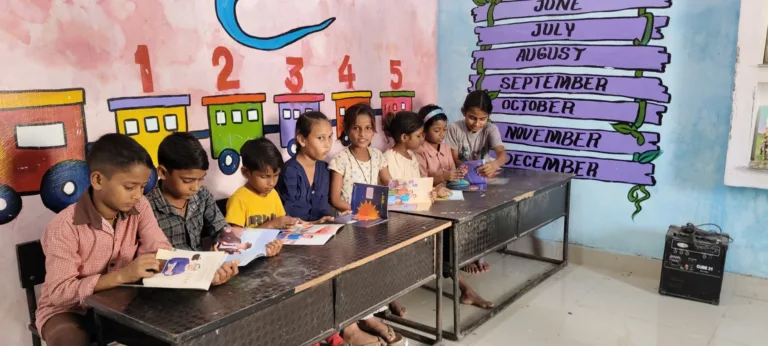
At Shail-Satya Foundation (SSF), we do not wait for national transformation to unfold from above. Under our Gyanoday and Dosti Kitabon Se educational initiatives, we actively bridge the public-private divide in rural Uttar Pradesh and Bihar. By setting up fully equipped community libraries in underserved villages, distributing high-quality bilingual textbooks, and providing free evening tutoring sanctuaries, we ensure that rural children enjoy the same rich intellectual environment as their urban peers.
What is the core philosophy of ‘One Nation, One Education’?
‘One Nation, One Education’ asserts that every child in India, regardless of family wealth, caste, or geography, has the fundamental right to study under the same high-quality curriculum, with equal access to trained teachers, digital infrastructure, and career opportunities.
Does ‘One Nation, One Education’ eliminate regional languages and state autonomy?
No. It unifies pedagogical quality, learning outcomes, and foundational standards while celebrating linguistic diversity. Consistent with NEP 2020, primary education is anchored in the child’s mother tongue or regional language, with common benchmarks for math, science, and analytical thinking.
Why do parents choose expensive private schools over free government schools?
Due to historical under-investment, many government schools suffer from broken infrastructure, high student-teacher ratios, and lack of English exposure. ‘One Nation, One Education’ seeks to upgrade government schools to world-class standards so parents naturally prefer public education.
How does the Kothari Commission relate to this vision?
The 1966 Kothari Commission proposed the ‘Common School System’ to prevent educational apartheid based on class. It recommended that public schools be the primary vehicle of nation-building, bringing children of all socio-economic backgrounds together under one roof.
How can citizens support equal education through Shail-Satya Foundation?
Citizens can sponsor village community library bookshelves, donate books and digital learning tablets, or volunteer as reading mentors for rural first-generation learners through our educational campaigns.
Policy & Educational References
- Ministry of Education, Government of India: National Education Policy 2020 (NEP 2020) — Foundational Literacy, Equity & Inclusivity in Education.
- NCERT: National Curriculum Framework for School Education (NCF-SE 2023).
- Ministry of Education (1966): Report of the Education Commission (1964–66): Education and National Development (Kothari Commission).
- Unified District Information System for Education (UDISE+): Flash Statistics on School Education in India.