
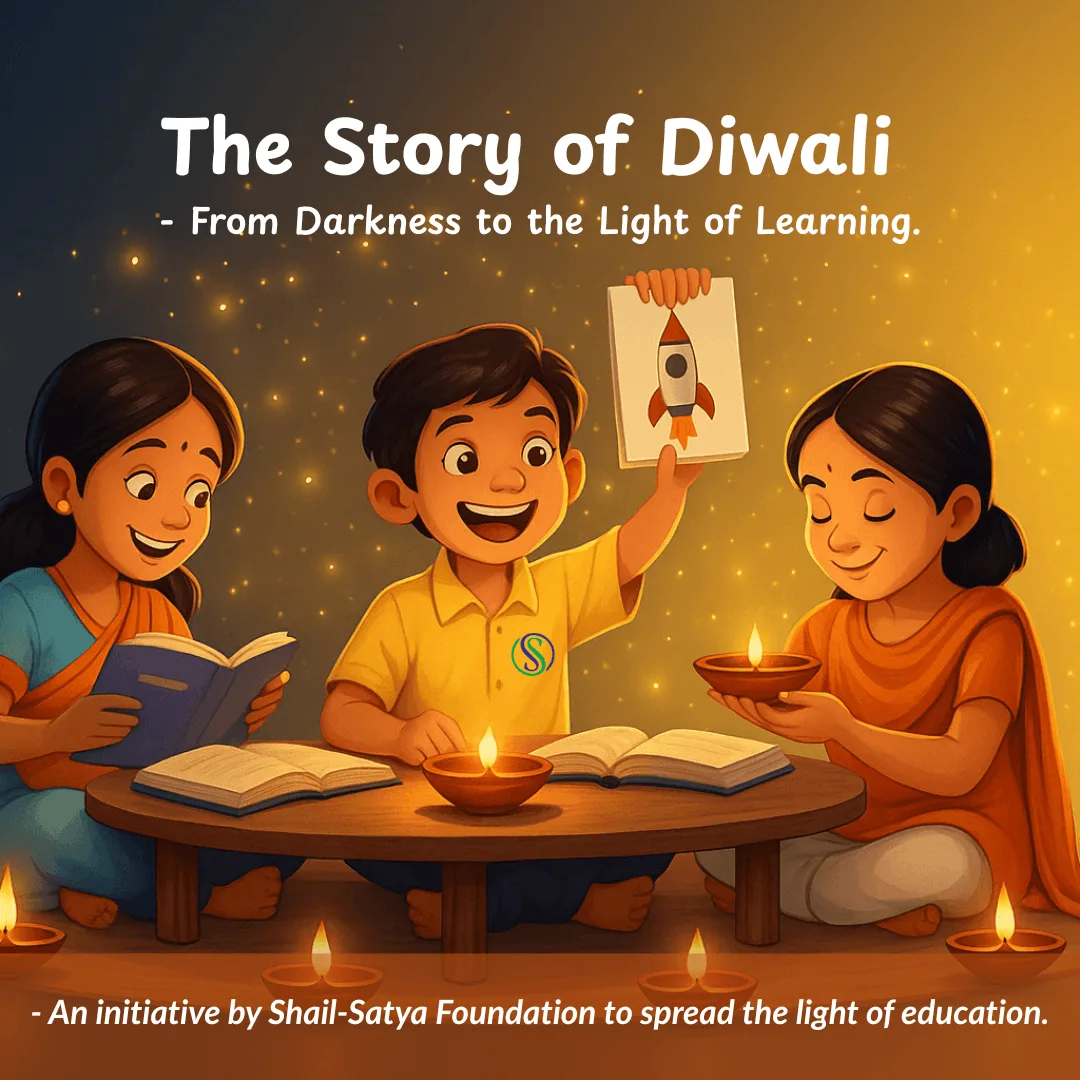
Step outside on Kartik Amavasya, and Indian streets feel completely different. The cool air carries the scent of roasted clay, mustard oil, and fresh marigolds. For centuries, families have lit rows of clay lamps. Yet beyond firecrackers, the true Diwali celebration and significance lies in something far quieter: light only matters when it reaches those in the dark. As we celebrate, practical precautions keep our children safe, while sharing the gift of education with boys and girls who need it most.
-
Cultural Roots: Welcoming Sri Rama to Ayodhya, honoring Lakshmi and Ganesha, and celebrating the quiet triumph of goodness over arrogance. -
Everyday Safety: Guarding young hands from burns, keeping synthetic clothes away from flames, and keeping neighborhood air clean. -
Living Philosophy: Unpacking Tamaso Ma Jyotirgamaya—why learning is the only light that never burns out. -
A Lasting Gift: Swapping firecrackers for a classroom reading shelf through Dosti Kitabon Se changes a child’s life.
The Eternal Flame: Understanding Diwali Celebration and Significance
Every Indian child remembers hearing how Ayodhya lit lamps on the darkest night of the year to welcome their exiled prince home. When you light a clay diya, you prove that baked earth and oil can push back the night. That quiet conviction forms the bedrock of Diwali celebration and significance.
Sri Rama’s Return: The Spiritual Essence of Diwali Celebration
In the Ramayana, Rama’s homecoming after fourteen years in the forest was personal for every family. With Ravana defeated, arrogance collapsed. Citizens had no fireworks; they simply took river clay, poured mustard oil, and lined doorways. That remains the real spirit of Diwali celebration and significance: choosing hope over defeat.
Lakshmi and Ganesha: The Moral Significance of Diwali
During evening puja, we never worship Goddess Lakshmi alone; Lord Ganesha sits right beside her. Why? Because money without good judgment ruins families. By seating Ganesha next to Lakshmi, our traditions offer a clear lesson: pray for prosperity, but pray first for the wisdom to use it well. In understanding the deeper Diwali celebration and significance, wealth only matters when it lifts someone else up.
Universal Echoes: Pluralistic Traditions of Light Across India
Across India, different communities celebrate this evening with moving traditions:
- Jain Heritage: Marks Bhagwan Mahavira’s Nirvana at Pavapuri in 527 BCE, honoring his teachings on non-violence.
- Sikh Tradition (Bandi Chhor Divas): Celebrates Guru Hargobind Ji freeing 52 innocent kings from Gwalior Fort; Amritsar shone with lamps of freedom.
- Harvest Thanksgiving: Marks the Kharif harvest. Families thank Mother Earth and share fresh grain with local workers.
Mindful Diwali Celebration and Significance: Essential Safety and Precautions
Talk to any doctor on emergency duty on Diwali night, and you’ll hear tough stories of child burns from sparklers and seniors struggling for breath. To honor the true spirit of Diwali celebration and significance, our festivities must never compromise child safety or community health.
Child & Fire Safety: Creating an Accident-Free Festive Home
Children get excited on Diwali—and they should. But young hands are clumsy, and fire moves fast. A spark landing on synthetic clothing can cause serious harm in seconds. Here are four practical rules every family should keep:
Festive Hazards: Safety Precautions for Diwali Celebration
- Stay Beside Children: Never leave young kids alone with lit lamps. Keep a water bucket right nearby.
- Choose Cotton Wear: Dress kids in fitted cotton clothes. Synthetic fabrics catch fire very quickly.
- Sparklers at Arm’s Length: Teach kids never to run with sparklers, and never touch unexploded fireworks.
- Stable Diya Spots: Place lamps on wide brick ledges, well away from curtains, door mats, and pet paths.
Conscious Eco-Friendly Celebrations
- Buy from Street Potters: Buy clay diyas from local artisans. It puts dinner on their tables and avoids plastic waste.
- Petal Rangolis: Use marigolds and rice flour. They wash cleanly into the soil without synthetic chemicals.
- Celebrate Without Smoke: Choose oil lamps over crackers. It keeps neighborhood air clean for babies and seniors.
- Look After Animals: Street dogs and pets have sensitive ears. Keep animals indoors in quiet rooms during peak hours.
Clean Air and Respiratory Care: Navigating Seasonal Pollution
Every autumn, winter weather traps ground smoke. According to Central Pollution Control Board (CPCB) advisories, cracker smoke spikes PM2.5 levels fast. Clay lamps protect vulnerable lungs, showing real care for neighbors.
From Darkness to Light: The Deeper Significance of Diwali for Children
Watch a burning diya closely. It doesn’t make a sound, yet it steadily pushes back the shadows. That quiet power is the real meaning of Diwali celebration and significance.
Centuries ago, the Brihadaranyaka Upanishad recorded: “Asato Ma Sadgamaya, Tamaso Ma Jyotirgamaya.” Darkness here means Avidya—the shadows of illiteracy and lost potential. When you put a book in a child’s hands, you bring that ancient prayer to life.
The Deepest Darkness: Millions of Young Minds Left in the Shadows
While city homes glitter with lights, visit a primary school in a nearby village. You’ll see bare rooms, cracked blackboards, and kids sharing torn books—first-generation learners whose parents never had the chance to read.
Field research by UNESCO confirms that children who don’t read with confidence by age eight fall behind in every subject. They lose heart and drop out early. That is the real darkness in our society—and fireworks won’t hide it.
A box of crackers costs hundreds of rupees, makes noise for two minutes, and leaves behind toxic smoke. A good book in a child’s hands costs less, lasts for years, and changes an entire family’s future.
— On-Ground Field Perspective, Shail-Satya Foundation
Be the Diya: How Education Transforms a Child’s Future
Remember holding your first storybook? The colorful pictures and discovery. For an underserved child, that moment changes everything.
Illustrated storybooks in mother tongues turn reading from an exam chore into an exciting daily discovery.
Every year of completed schooling increases future earnings by 10%, giving rural families a lasting way out of debt.
Open library shelves let children browse science books and folktales without fear of being scolded for asking questions.
Educated girls stay in school, make informed life choices, and help raise healthier, confident communities.
This is where Diwali celebration and significance meets real grassroots work. Through Dosti Kitabon Se (“Friendship with Books”), the Shail-Satya Foundation (SSF) builds low-height wooden book corners in rural government schools across Uttar Pradesh and Bihar. Sitting on woven mats, children explore folktales together, discovering the simple joy of reading.
Market Retail Data
SSF Education Fund
Field Impact Tracking
Meaningful Celebrations: The Lasting Significance of Diwali for Education
Every festive season, we spend freely on sweets and gift boxes soon forgotten. What if five families set aside a small slice of their festive budget? Together, you could fund a reading corner for sixty rural children.
- Gift a Storybook: When you visit family, hand a book to your nephew, niece, or neighborhood child alongside their mithai.
- Sponsor a School Shelf: Help furnish a rural classroom with 50+ regional storybooks through our Dosti Kitabon Se initiative.
- Volunteer a Story Hour: Spend an afternoon reading stories with children at a nearby community center or shelter.
- Support Steady Grassroots Work: Partner with Shail-Satya Foundation to keep books, stationery, and mentors reaching rural classrooms year-round.
Frequently Asked Questions About Diwali, Safety, and Giving Back
What is the deepest spiritual significance of lighting diyas on Diwali?
The earthen diya represents the human self. The baked clay is our body, the oil is our character, and the cotton wick is a focused mind. Lighting the lamp means promising to seek knowledge (Jnana) and push back the darkness of ignorance (Avidya).
What are the most crucial fire safety precautions for families with children?
Keep children in natural cotton clothing, never leave them alone with sparklers, keep water buckets nearby, and never let kids touch unexploded firecrackers.
How does Indian philosophical tradition connect light directly with child education?
Our ancient texts never treated light as mere decoration. In the prayer “Tamaso Ma Jyotirgamaya,” light stands for knowledge that frees the mind. Educating an underserved child turns that ancient prayer into daily reality.
How can I donate books or sponsor an SSF community library this Diwali?
You can contribute through our Online Support Page. Your gift funds child-friendly bookcases, reading mats, and storybooks in Hindi and English for rural schools across Uttar Pradesh and Bihar.
When fireworks fade and lamps burn low, the only light that endures is the hope we spark in someone else. Let us celebrate with love, keep families safe, and remember that the true Diwali celebration and significance is the gift of education we pass to our children.