Discover the top 10 education NGOs in India for 2025 driving grassroots learning, foundational literacy, rural community libraries, and girls' schooling across the nation.
India’s journey toward universal, equitable learning is powered by visionary civil society organizations working tirelessly at the grassroots level. From pioneering foundational reading programs to setting up solar-lit rural community libraries, the top 10 education NGOs in India for 2025 are dismantling barriers of poverty, distance, and gender to ensure every child has the opportunity to thrive.
-
National Footprint: Spotlighting organizations that together reach over 100 million underprivileged children across 28 states and union territories. -
Holistic Pedagogical Models: Moving beyond rote memorization toward digital literacy, peer reading circles, and mental wellbeing. -
Rigorous Evaluation Criteria: Ranked on verified grassroots reach, systemic innovation, financial governance, and third-party impact audits. -
Transparent Donor Avenues: Compliant non-profit registered under Section 12A, with 80G registration applied and in process.
How We Evaluated and Selected These Organizations
Selecting the top educational non-profits requires looking beyond website claims to evaluate tangible on-ground transformation. Our 2025 editorial evaluation benchmarked organizations against four core pillars:
Direct engagement with marginalized rural hamlets, tribal settlements, urban slums, and out-of-school girl children.
Pioneering approaches including community-owned libraries, teaching fellowships, experiential STEM kits, and health-literacy convergence.
Active NITI Aayog DARPAN registration, 12A validation, 80G applied status, published annual audited balance sheets, and CSR-1 compliance.
Empirical evidence demonstrating marked gains in foundational reading, mathematical fluency, and secondary school retention.
The Top 10 Education NGOs in India (2025 Guide)
1. Pratham Education Foundation
Founded in 1995 to provide pre-school education in the slums of Mumbai, Pratham has grown into India’s largest and most influential non-governmental education organization. Renowned globally for its annual ASER (Annual Status of Education Report), Pratham’s research directly informs national pedagogical policy and curriculum reforms.
- Core Focus: Foundational literacy and numeracy (FLN), early childhood education, vocational training for youth.
- Signature Program: Read India — helping primary school children achieve grade-level reading and arithmetic fluency through high-impact learning camps.
- Verified Reach: Over 75 million children impacted across 21 states and union territories.
Visit Official Website: Pratham Education Foundation →
2. Teach For India
A flagship pillar of the global Teach For All network, Teach For India (TFI) is a nationwide movement dedicated to eradicating educational inequity. By recruiting exceptional university graduates and working professionals for a rigorous two-year full-time fellowship, TFI places dynamic educators directly into under-resourced municipal and low-income private schools.
- Core Focus: Classroom leadership, school systemic reform, and educational equity advocacy.
- Signature Program: The TFI Fellowship and alumni leadership network creating scalable impact across public policy, school administration, and ed-tech.
- Verified Reach: 1,200+ Fellows reaching 38,000+ students across 8 metropolitan cities annually.
Visit Official Website: Teach For India →
3. Shail-Satya Foundation (SSF)
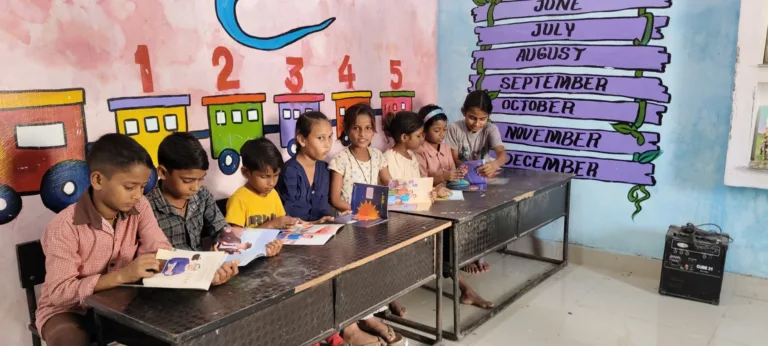
Shail-Satya Foundation is an emerging, high-impact non-profit organization distinguished by its unique integration of education, community libraries, and public healthcare. Operating primarily across underserved districts of Uttar Pradesh and Bihar, SSF establishes living village learning centers that double as safe sanctuaries for adolescent girls, health literacy nodes, and civic awareness hubs.
- Core Focus: Rural community libraries, constitutional awareness, student mental health, and adolescent hygiene.
- Signature Programs: Dosti Kitabon Se (community library expansion), Gyanoday (foundational learning kits), and rural mental wellbeing dialogues.
- Verified Reach: 10+ operational and expanding community libraries, 10,000+ students supported with books and hygiene kits.
Visit Official Website: Shail-Satya Foundation →
True educational reform does not occur in isolated air-conditioned conference rooms. It happens when a village community takes ownership of its children’s library, lighting the lamp of learning that no economic storm can blow out.
— Shail-Satya Foundation Institutional Vision
4. Room to Read India
Room to Read envisions a world in which all children can pursue a quality education and reach their full potential. Collaborating with state governments, the organization constructs child-friendly school libraries and publishes high-quality children’s literature in regional Indian languages.
- Core Focus: Primary school literacy, bilingual children’s book publishing, and girls’ secondary education support.
- Signature Program: Girls’ Education Program — life skills mentoring and scholarships keeping rural adolescent girls in secondary school.
- Verified Reach: 20+ million children benefited across multiple states with over 10,000 schools transformed.
Visit Official Website: Room to Read India →
5. Educate Girls
Founded by Safeena Husain, Educate Girls tackles gender inequality at the deepest grassroots levels of rural Rajasthan, Madhya Pradesh, and Uttar Pradesh. Utilizing advanced machine learning algorithms to identify villages with high concentrations of out-of-school girls, their village volunteer force mobilizes communities to prioritize female education.
- Core Focus: Re-enrolling out-of-school girls, foundational learning, and gender-equal community governance.
- Signature Program: Mobilizing over 15,000 Team Balika community volunteers who conduct door-to-door enrollment drives.
- Verified Reach: 2.1+ million out-of-school girls enrolled, benefiting over 18 million children across 20,000 villages.
Visit Official Website: Educate Girls →
6. Smile Foundation
Through its flagship Mission Education initiative, Smile Foundation provides basic education and healthcare to children living in urban slums and remote rural areas. By coupling academic training with regular nutrition and health checkups, Smile ensures children not only attend school but possess the vitality to learn.
- Core Focus: Integrated child education, nutrition, healthcare, and livelihood training for youth.
- Signature Program: Mission Education — supporting over 200 welfare projects in 25 states.
- Verified Reach: Over 1.5 million children and families supported directly every year.
Visit Official Website: Smile Foundation →
7. Project Nanhi Kali
Jointly managed by the K.C. Mahindra Education Trust and Naandi Foundation, Project Nanhi Kali is one of India’s longest-standing girl-child empowerment programs. Nanhi Kali provides comprehensive academic, material, and social support to ensure girls from low-income families complete ten years of formal schooling.
- Core Focus: Girl-child education, digital tablet learning, and secondary school completion.
- Signature Program: Personalized digital learning through academic kits and localized community tutors called Community Associates.
- Verified Reach: Over 500,000 girls supported across 14 states with a 90%+ school attendance record.
Visit Official Website: Project Nanhi Kali →
8. The Akanksha Foundation
For over 30 years, The Akanksha Foundation has pioneered a transformative public-private partnership model in municipal education. Akanksha operates innovative, high-performing schools in partnership with municipal corporations in Mumbai and Pune, delivering holistic education that rivals private institutions.
- Core Focus: Model school management, social-emotional learning, art and sports excellence.
- Signature Program: The Akanksha School Project — managing 26 public schools with 10,000+ students.
- Verified Reach: 13,000+ alumni with an 85%+ higher education or formal employment placement rate.
Visit Official Website: Akanksha Foundation →
9. Bhumi
Bhumi is one of India’s largest independent youth volunteer organizations. Through its educational initiative Ignite, Bhumi mobilizes passionate young volunteers across 14 cities to provide supplementary education, mentorship, and computer literacy to children living in shelter homes and community centers.
- Core Focus: Volunteer-driven STEM education, English literacy, and career coaching for orphaned and vulnerable youth.
- Signature Program: Ignite — delivering weekend learning modules led by trained student and corporate volunteers.
- Verified Reach: 25,000+ children educated annually through 20,000+ active volunteer fellows.
Visit Official Website: Bhumi →
10. Kartavya
Conceived and founded in 1999 by undergraduate engineering students at IIT (ISM) Dhanbad, Kartavya addresses the critical educational needs of slum children. Operating volunteer-run evening study centers, Kartavya bridges the gap between underprivileged students and premier academic institutions.
- Core Focus: After-school tutoring, nutritious meals, computer skills, and higher education sponsorship for slum children.
- Signature Program: Student-led evening study hubs located near major engineering university campuses.
- Verified Reach: Thousands of first-generation learners supported into university degrees and technical vocations.
Visit Official Website: Kartavya →
Grassroots Library Networks vs. Large-Scale Policy Think-Tanks
When selecting which education organization to support, understanding the fundamental differences between institutional operating models helps donors align their impact objectives:
National Policy Networks
- Focus on macro-level curriculum assessments and policy lobbying.
- Requires extensive multi-year timelines to influence bureaucratic structures.
- Heavy overhead costs allocated toward research papers and administrative overhead.
- Less visibility for micro-donors on individual student outcomes.
Grassroots Community Hubs (SSF Model)
- Immediate tangible impact: physical books in children’s hands today.
- Hyper-local community ownership managed by village parents and youth.
- Direct integration with healthcare camps, adolescent hygiene, and clean water.
- 100% transparent tracking with real-time photographic updates for donors.
Before making a financial contribution, ensure the NGO is officially registered on the government’s NITI Aayog NGO-DARPAN portal with a valid Unique DARPAN ID. Verify that they hold active registration under Section 12A (tax exemption on trust income), Section 80G (tax deduction for Indian donors), and MCA Form CSR-1 if partnering for institutional CSR funds.
4 Actionable Ways You Can Support Education in India Today
Every citizen has the power to participate in India’s educational renaissance. Here are four verified ways to make a lasting difference:
- Set Up a Monthly Micro-Donation: Recurring contributions (even ₹251 or ₹501/month) provide steady, predictable operational funding for rural learning centers.
- Donate Books and Stationery: Collect gently-used bilingual storybooks, encyclopedias, and art supplies for rural library distribution drives.
- Volunteer Your Professional Skills: Offer weekend virtual tutoring, graphic design, content writing, or digital literacy coaching for non-profit teams.
- Introduce Non-Profit Partners to Corporate CSR: Connect reputable NGOs to your company’s HR or CSR committees for annual workplace giving campaigns.
Are donations to these top education NGOs eligible for 80G tax deductions?
Established non-profits like Pratham and Teach For India offer 80G tax deductions. Shail-Satya Foundation has applied for 80G registration and its approval certificate is currently under process with the Income Tax Department (80G tax exemption is currently not available for SSF donors). SSF is officially registered on NGO Darpan (UP/2025/0572608) and provides official numbered receipts for all contributions.
Can international donors contribute to Indian education non-profits?
International donors can contribute to Indian NGOs that possess an active FCRA (Foreign Contribution Regulation Act) license approved by the Ministry of Home Affairs, or via verified international philanthropic intermediary chapters (such as 501(c)(3) entities in the United States).
How can I know if my donation actually reaches a student?
Credible organizations publish transparent annual reports, audited financial balance sheets, and impact assessments. Grassroots foundations like Shail-Satya Foundation provide donors with photographic verification, library geotags, and direct milestone reports detailing which books and centers their contributions funded.
Can I sponsor a specific community library or rural classroom?
Yes. Many education NGOs, including Shail-Satya Foundation, offer dedicated institutional and individual sponsorship packages where donors can fund an entire community library, solar lighting system, or annual book collection in honor of a loved one or family milestone.
How do education NGOs partner with government schools?
Most leading education NGOs work in close synergy with state education departments under formal Memorandums of Understanding (MoUs). Rather than competing with public schools, NGOs provide supplementary teacher training, digital equipment, after-school remedial tutoring, and community library hubs that dramatically improve government school retention and learning outcomes.