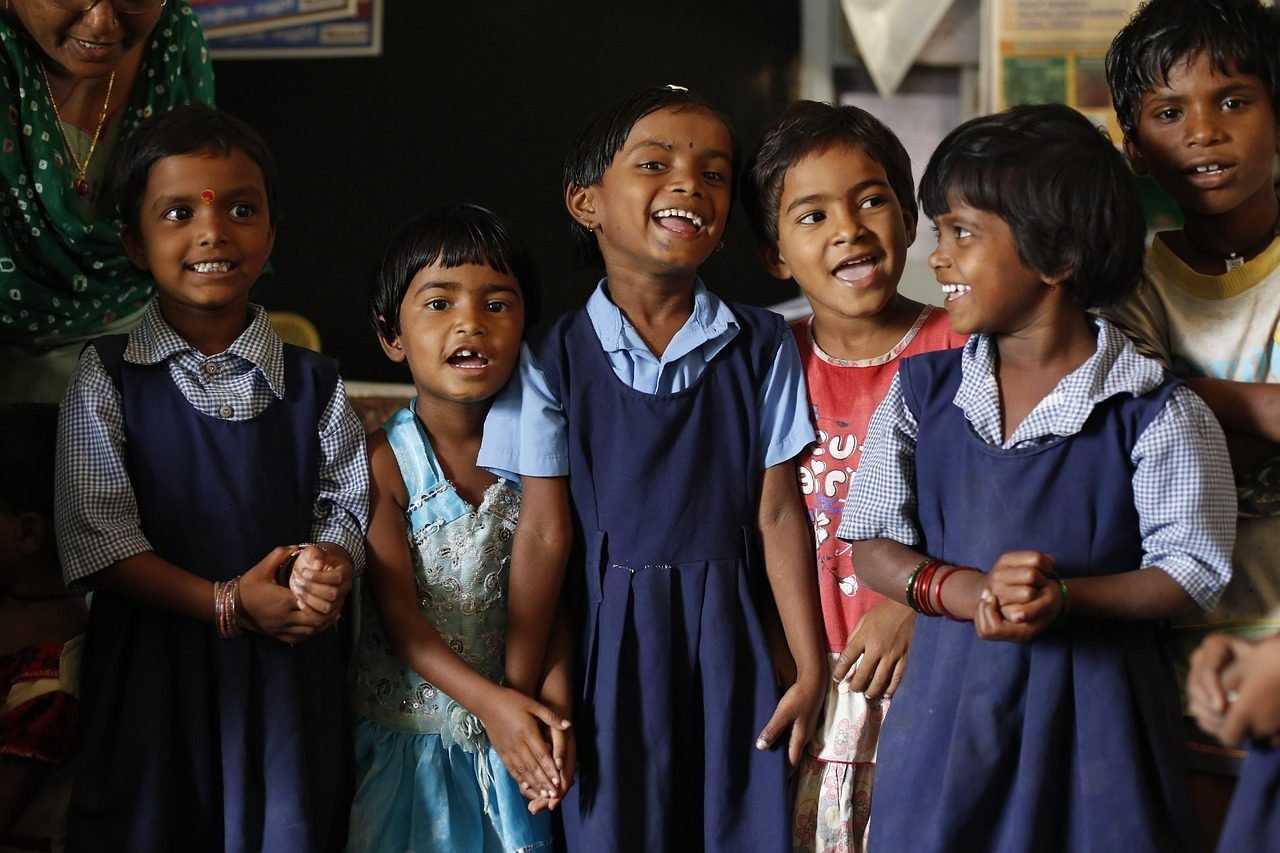
Education empowers. Shail-Satya Foundation is making learning accessible to every child—one book, one opportunity at a time.
-
Universal Human Right: Education is not a privileged luxury; it is the constitutional cornerstone of human dignity, self-reliance, and equity. -
Overcoming the Reading Deficit: Over 50% of rural Class 5 students struggle to read Class 2 text due to a severe absence of engaging books. -
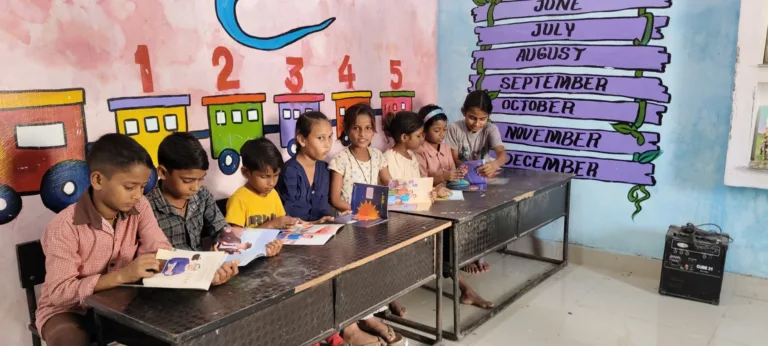
Grassroots Library Ecosystem: Through Dosti Kitabon Se, SSF creates child-friendly reading rooms inside underserved government schools. -
Generational Multiplier: Educating a child transforms household livelihoods, eliminates child labor, and powers long-term community resilience.
Education is far more than a pathway toward livelihood—it is the foundational architecture of an equitable, enlightened, and dignified society. At Shail-Satya Foundation (SSF), we believe that quality education is every child’s birthright, never a privilege reserved for the economically fortunate. When a child learns to read with joy and comprehension, they acquire the lifelong power to question, innovate, and break free from generational cycles of poverty.
Why Education Matters: Building Character, Agency, and Equity
Foundational education does vastly more than teach the mechanics of literacy and basic arithmetic. It nurtures critical reasoning, builds empathetic character, and equips young minds to interpret the rapidly evolving world around them. An educated individual is significantly more likely to maintain healthy living practices, achieve economic self-determination, and champion civic responsibilities in their local community.
Moreover, education serves as the most potent engine of gender justice on earth. When young girls stay in school through secondary grades, child marriage rates plummet, maternal health outcomes surge, and entire family units experience accelerated economic mobility. Education dismantles age-old caste, gender, and socio-economic barriers with quiet, permanent efficacy.
Education is the most powerful weapon which you can use to change the world. It is through education that the daughter of a peasant can become a doctor, that the son of a mineworker can become the head of the mine, that a child of farmworkers can become the president of a great nation.
— Nelson Mandela, Champion of Human Dignity
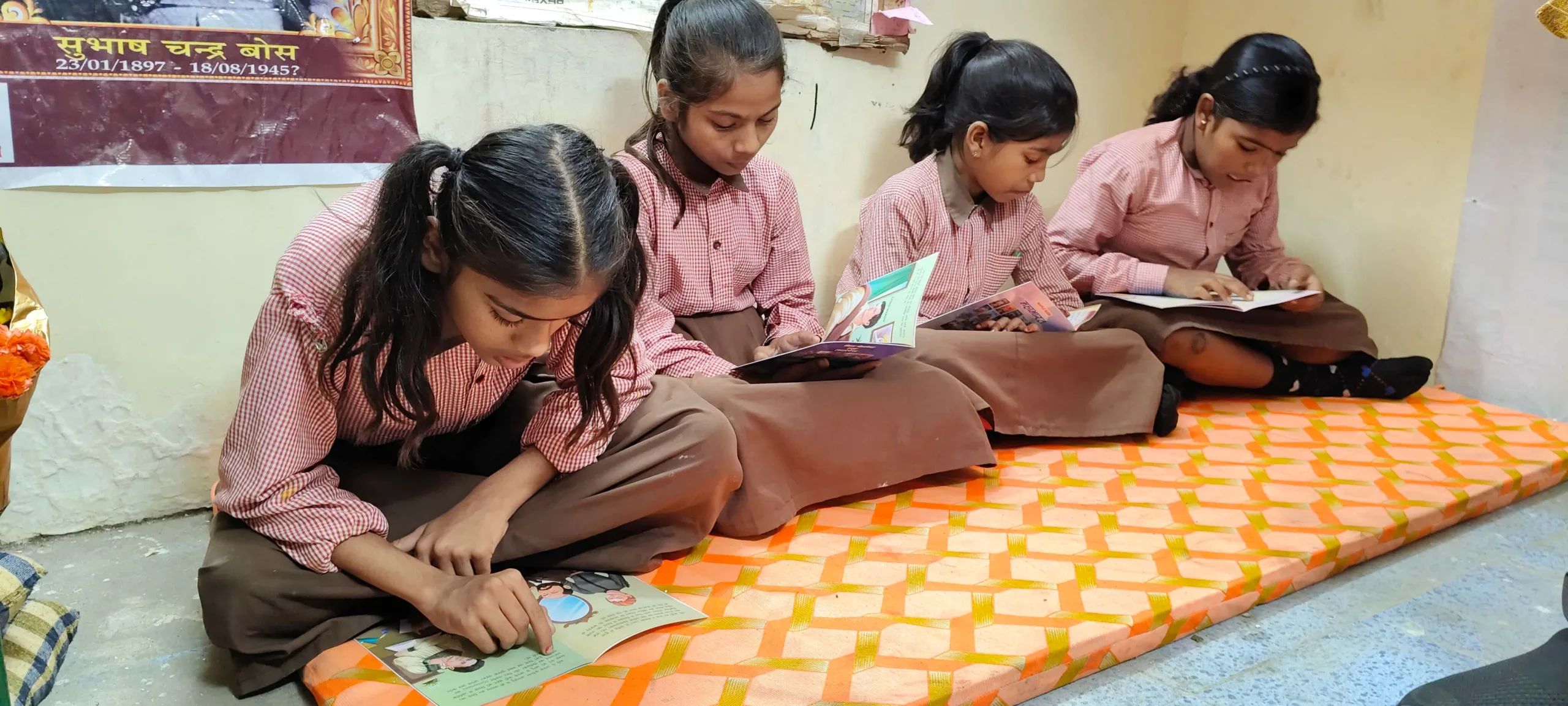
The Reality: Structural Barriers to Rural Learning
While India has achieved commendable gains in gross school enrollment over the last two decades, access to schooling has not automatically translated into access to learning. Millions of students—particularly in rural agrarian belts and urban slum clusters—confront severe structural bottlenecks that hinder their cognitive and academic development:
Government school classrooms often possess only standard government textbooks. Without colorful storybooks, fables, and age-appropriate literature, children develop reading anxiety rather than reading pleasure.
Over 70% of rural pupils are first-generation school-goers whose parents cannot read or write. Without homework assistance or reading role models at home, children fall behind grade-level competencies early.
Adolescent girls face domestic chore burdens, safety concerns during commutes, and inadequate sanitation facilities in rural schools, causing high attrition rates upon reaching puberty.
Emphasis on mechanical copying from blackboards suppresses natural inquiry and problem-solving, leaving students ill-equipped for modern vocational and technological livelihoods.
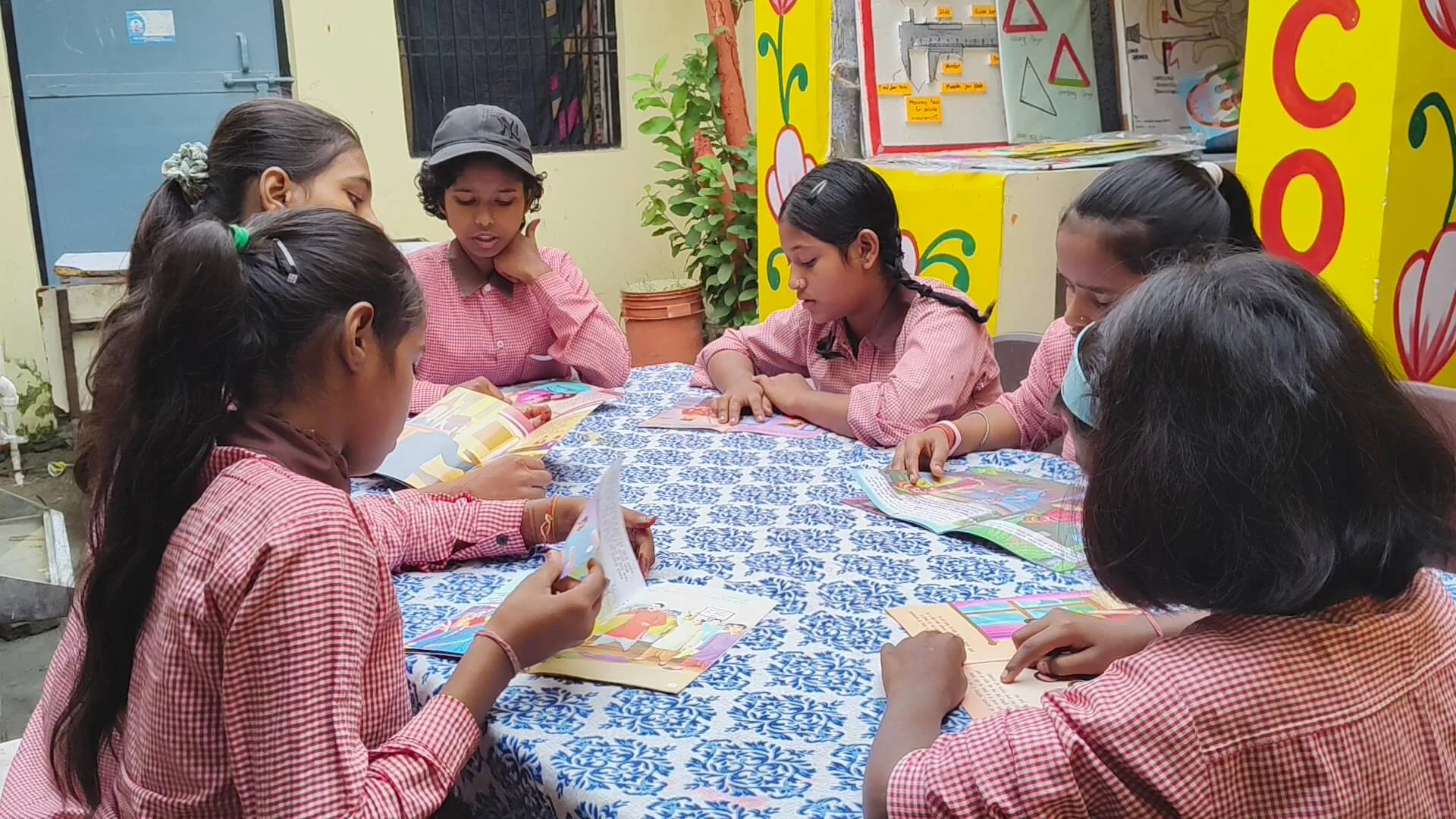
Transforming Education: Conventional Rote System vs. SSF Active Learning Model
Bridging India’s learning gap requires moving beyond physical school buildings to cultivate vibrant, student-centered intellectual ecosystems:
Conventional Rural Classroom Reality
- Textbook Exclusivity: Students read only rigid syllabus books, viewing reading as a chore tied solely to examinations.
- Mechanical Rote Recitation: Memorization of sentences without understanding core vocabulary or conceptual context.
- Locked or Absent Libraries: Books locked away in administrative cupboards to prevent damage or loss.
- Passive Learning Atmosphere: High fear of failure and punishment leading to disengagement and silent dropouts.
- Resource Deprivation: Zero access to maps, illustrated atlases, scientific experiments, or computers.
SSF Active Learning & Library Ecosystem
- Open-Access Shelving: Bright, accessible display racks where children freely touch, browse, and borrow storybooks.
- Contextual & Mother-Tongue Literature: Hindi, regional dialects, and bilingual books featuring relatable characters and rich folk heritage.
- Peer Reading Circles: Group storytelling and buddy reading that build confidence and peer mentorship naturally.
- Creative Expression Workshops: Drawing, poetry recitation, and creative writing sessions that unleash imagination.
- Sustainable Community Ownership: Local teachers and student library monitors actively manage and nurture the collection.
In educational cognitive development, the transition from “learning to read” to “reading to learn” occurs between Class 2 and Class 4. If a child fails to achieve basic phonetic decoding and comprehension fluency by age 9, every subsequent subject—science, social studies, and mathematics—becomes increasingly unintelligible. Open-access libraries directly demolish this reading wall by nurturing voluntary, joyful reading habits during this critical developmental window.
Our Role: Bringing Joyful Learning to Every Child
Through our flagship campaign Dosti Kitabon Se (“Friendship with Books”), Shail-Satya Foundation transforms under-resourced schools into hubs of vibrant learning and discovery:
- Dedicated School Library Deployment: We furnish government school classrooms with durable modular bookcases, comfortable reading mats, and vibrant wall art to create warm, inviting reading corners.
- Carefully Curated Multi-Tiered Collections: Each library receives 250 to 500 hand-picked titles spanning folklore, science, history, nature, environmental conservation, and biographies of inspirational Indian leaders.
- Teacher Capacity & Reading Champions: We collaborate closely with dedicated headmasters and primary educators, training youth volunteers and student “Bal Pustakalayadhyaksh” (child librarians) to lead lending routines.
- Remedial Learning Camps & Book Fairs: We host community book fairs, reading festivals, and foundational phonics workshops in remote hamlets, inspiring parents to value reading at home.
Join the Movement: How You Can Empower Young Learners
Democratizing access to high-quality education requires the collective dedication of citizens, philanthropists, and community advocates. Here is how you can directly ignite a child’s academic future:
- Sponsor a Village School Library: A tax-deductible contribution of ₹25,000 to ₹35,000 establishes a complete, permanent school library with 300+ books, modular racks, and reading decor.
- Donate Quality Books: Ship new or gently used children’s storybooks, bilingual readers, picture encyclopedias, and educational board games to our Varanasi distribution center.
- Volunteer as a Weekend Reading Mentor: Dedicate two hours on Saturdays to conduct interactive storytelling, phonics games, or science demonstrations at an SSF school library.
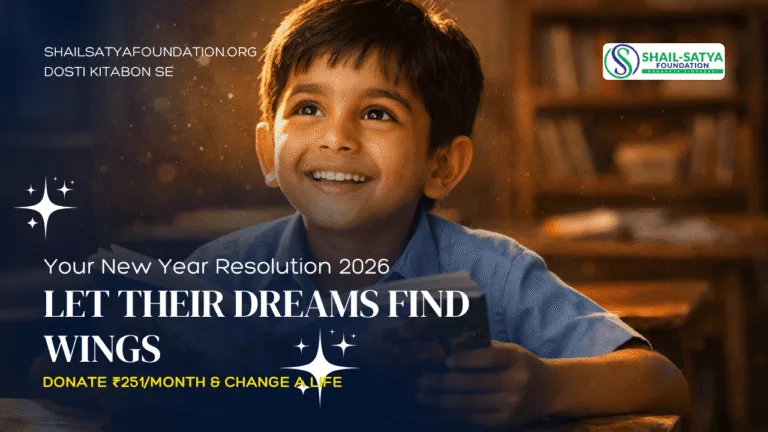
- Monthly Child Sponsorship: A small monthly commitment of ₹251 covers school learning kits, essential stationery, notebooks, and library maintenance for a deserving child.
Frequently Asked Questions
Why does Shail-Satya Foundation focus specifically on primary school libraries?
Primary school is the formative developmental window where children develop lifelong cognitive habits. Without foundational literacy by Class 3, children struggle across all academic subjects and become highly vulnerable to dropout. School libraries provide the diverse, joyful reading materials necessary to make reading a voluntary, beloved daily habit.
How are books selected for SSF community libraries?
Our curation team selects age-appropriate, beautifully illustrated titles from trusted Indian children’s publishers (such as National Book Trust, Pratham Books, and CBT). The collection balances moral fables, regional folklore in Hindi, introductory science, environmental awareness, and inspiring biographies.
Can individuals donate used books from their personal collections?
Yes. We welcome gently used children’s storybooks, pictorial dictionaries, and illustrated educational literature in Hindi and English. Books should be in clean, readable condition without torn or missing pages so children receive them with dignity and pride.
What impact has the Dosti Kitabon Se initiative demonstrated so far?
Partner schools report noticeable improvements in student attendance, enhanced vocabulary and Hindi reading speed, increased confidence during classroom discussions, and a remarkable surge in girls borrowing books to read with younger siblings at home.
How can corporate organizations partner with SSF under CSR programs?
Corporate partners can adopt clusters of 5 to 20 rural schools under their corporate social responsibility (CSR) education mandates. We provide end-to-end implementation, baseline and endline reading impact assessments, transparent photographic verification, official numbered receipts, and detailed audit reports (80G application under process).