Academic pressure in Indian students has reached crisis levels, driven by competitive exams, parental expectations, and rote learning. Discover evidence-based strategies for students, parents, and schools to conquer anxiety and foster resilient, healthy education.
Academic pressure in Indian students has reached unprecedented levels, where high-stakes board examinations, relentless competitive coaching, and intense societal expectations trigger chronic anxiety, insomnia, and cognitive burnout. Yet, when numerical marks are prized above emotional wellbeing, the human and intellectual cost to our youth is devastating. Discover how students, parents, educators, and communities can transform this toxic dynamic into a balanced, resilient educational environment.
-
Pervasive Anxiety Crisis: Over 81% of Indian secondary students report acute exam-related anxiety and test distress (NCERT Mental Health Survey). -
Coaching & Evaluation Overload: Exhausting 12–14 hour daily regimens dismantle restorative sleep, physical health, and creative curiosity. -
Parental & Cultural Benchmarks: Cultural fixation on hyper-competitive engineering and medical seats fuels intense fear of failure. -
Multi-Tiered Interventions: Combining neuroscience-backed study methods, open emotional dialogue, and community library sanctuaries.
The National Epidemic of Student Stress in India
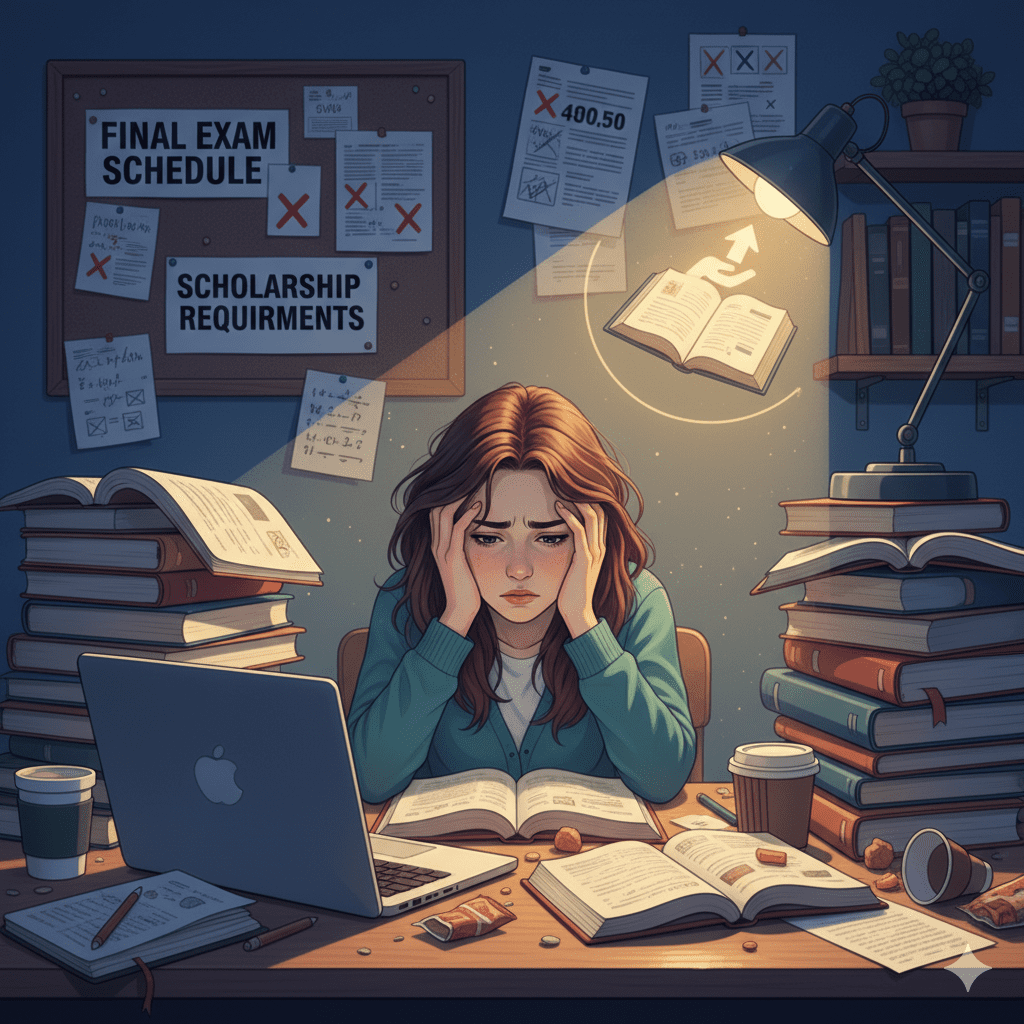
In modern India, academic pressure begins as early as middle school, intensifying exponentially through secondary grades and entrance preparation. Success is routinely reduced to a single metric: board percentages or national entrance percentiles. When educational institutions prioritize ranking over comprehensive development, students internalize extreme pressure, leading to profound psychological exhaustion.
Education was designed to ignite human curiosity and empower young minds, not to serve as an emotional pressure cooker that breaks their spirits. When we teach a child how to think rather than fear what they might score, we restore the sacred soul of learning.
— Shail-Satya Foundation Youth Wellbeing Initiative

Recognizing the Warning Signs of Academic Anxiety
Students rarely announce their psychological struggles verbally; instead, chronic distress manifests through behavioral shifts, physiological breakdowns, and cognitive impairment. Recognizing these signs early allows parents and educators to intervene before anxiety spirals into depression.
Elevated cortisol suppresses hippocampal function, causing severe test paralysis, inability to retrieve studied concepts, and chronic difficulty concentrating.
Late-night cramming, relentless screen exposure, and racing bedtime thoughts disrupt REM sleep, causing daylight fatigue and chronic irritability.
Recurrent unexplained migraines, nausea, gastrointestinal discomfort, appetite loss, and racing pulse triggered whenever exam schedules approach.
Abandoning hobbies, avoiding family gatherings, hypersensitivity to criticism, and experiencing persistent feelings of unworthiness or fraudulence.
Toxic Academic Pressure vs. Resilient Learning Environment
The solution is not lowering academic standards, but fundamentally restructuring the psychological and daily environment in which students study:
Toxic Academic Pressure
- Equates a student’s self-worth strictly with report cards and test percentiles.
- Sacrifices sleep, nutrition, and exercise for continuous cramming marathons.
- Fosters cut-throat peer rivalry and shame-driven parental comparisons.
- Treats mistakes and low scores as catastrophic personal failures.
- Suppresses emotional vulnerability, framing anxiety as a sign of weakness.
Resilient Learning Environment
- Values effort, analytical thinking, creativity, and moral character equally.
- Protects 7–8 hours of restorative sleep and incorporates active breaks.
- Encourages collaborative study groups and mutual academic peer mentorship.
- Frames mistakes as essential diagnostic steps in the learning journey.
- Normalizes conversations about mental stress and provides access to counselling.
In behavioral psychology, the Yerkes-Dodson Law dictates that performance increases with mental arousal, but only up to an optimal peak. When academic pressure escalates beyond this threshold into chronic stress, the prefrontal cortex suffers neural shutdown. Memory encoding falters, decision-making freezes, and students experience devastating exam-hall blackouts despite hundreds of hours of preparation.
Practical Strategies: How Students Can Master Academic Anxiety
Implementing targeted cognitive and behavioral adjustments can drastically lower physiological tension while simultaneously boosting academic retention:
- Adopt Evidence-Based Study Cadences: Replace passive marathon reading with the Pomodoro technique (25 minutes of focused learning followed by 5 minutes of total disengagement). Utilize active recall and spaced repetition flashcards rather than re-highlighting textbooks.
- Reframe Cognitive Distortions: Challenge catastrophic thoughts like “If I do not get into this institute, my life is over.” Remind yourself that career trajectories are multifaceted and that examinations test temporary preparation, not lifelong human intelligence.
- Prioritize Non-Negotiable Physiological Anchors: Ensure consistent 7–8 hours of uninterrupted sleep. High-retention neural consolidation occurs strictly during deep slow-wave sleep; cramming through the night directly causes next-day cognitive impairment.
- Utilize Safe Sanctuary Spaces: When household environments become noisy, chaotic, or emotionally tense, relocate to quiet community libraries where disciplined, calm peer atmospheres naturally soothe autonomic arousal.
The Role of Parents and Educational Institutions
Students cannot solve systemic educational pressure alone. Transforming academic stress requires profound systemic shifts at home and in the classroom:
- Unconditional Parental Validation: Regularly reassure young learners that family love and acceptance are never contingent on exam percentiles or university entrance results.
- School-Based Mental Health Infrastructure: Educational boards must mandate qualified resident adolescent counsellors, confidential distress hotlines, and destigmatized wellness periods within weekly schedules.
- De-emphasizing Public Rank Humiliation: Cease the demoralizing practice of posting public marks lists or comparing siblings and peers in domestic settings.
- Holistic Assessment Reform: Transition from high-stakes single-sitting examinations toward continuous, project-based, and collaborative competency evaluations as outlined in NEP 2020.
Shail-Satya Foundation’s Community-Driven Mental Health Initiatives
At Shail-Satya Foundation (SSF), we recognize that academic anxiety cannot be decoupled from societal infrastructure. Through our expanding network of rural community libraries under Dosti Kitabon Se, we provide children and young adolescents with safe, quiet, and resource-rich study sanctuaries away from overcrowded domestic quarters. Furthermore, our community youth workshops train rural and semi-urban parents on empathetic communication, stress de-escalation, and identifying early depressive symptoms.
Why is academic pressure significantly higher among Indian students?
Academic pressure in India is amplified by intense demographic competition, limited seats in premier public universities, severe economic inequality, and cultural expectations where professional degrees in engineering, medicine, or civil services are viewed as the sole pathways to social security and familial prestige.
What should parents do if a child experiences a panic attack before an exam?
Immediately remove the study materials. Focus on slow, grounded diaphragmatic breathing (such as the 4-7-8 breathing technique), offer a glass of water, and avoid lecture or interrogation. Reassure the child calmly that their safety and wellbeing are paramount, and that the exam is far less important than their immediate health.
How can students manage fear of failure when facing high-stakes entrance exams?
Students must detach their personal identity from test results. Map out viable alternative educational pathways in advance, practice timed mock tests in low-stakes settings to desensitize the nervous system, and maintain daily non-academic activities that preserve emotional balance.
Does cutting out all hobbies and recreation improve exam performance?
No. Research conclusively demonstrates that eliminating recreation, creative outlets, and physical movement leads to sensory fatigue, emotional resentment, and cognitive stagnation. Brief daily physical activity stimulates neurogenesis and sharply enhances memory consolidation.
How do Shail-Satya Foundation libraries support stressed students?
SSF village libraries provide calm, well-lit, dignified spaces with diverse reading materials, clean study environments, and supportive mentors. These spaces remove students from noisy, high-pressure households, allowing them to study at their own pace without constant surveillance or intimidation.
Academic & Clinical References
- NCERT (2023): National Mental Health Survey of School Students — Mental Health and Well-being of School Children Across India.
- NCRB (2023): Accidental Deaths and Suicides in India (ADSI) Report — Ministry of Home Affairs, Government of India.
- World Health Organization (WHO): Adolescent Mental Health: Global Burden and Key Interventions.
- UNICEF India: Adolescent Development and Mental Health in Young People.