


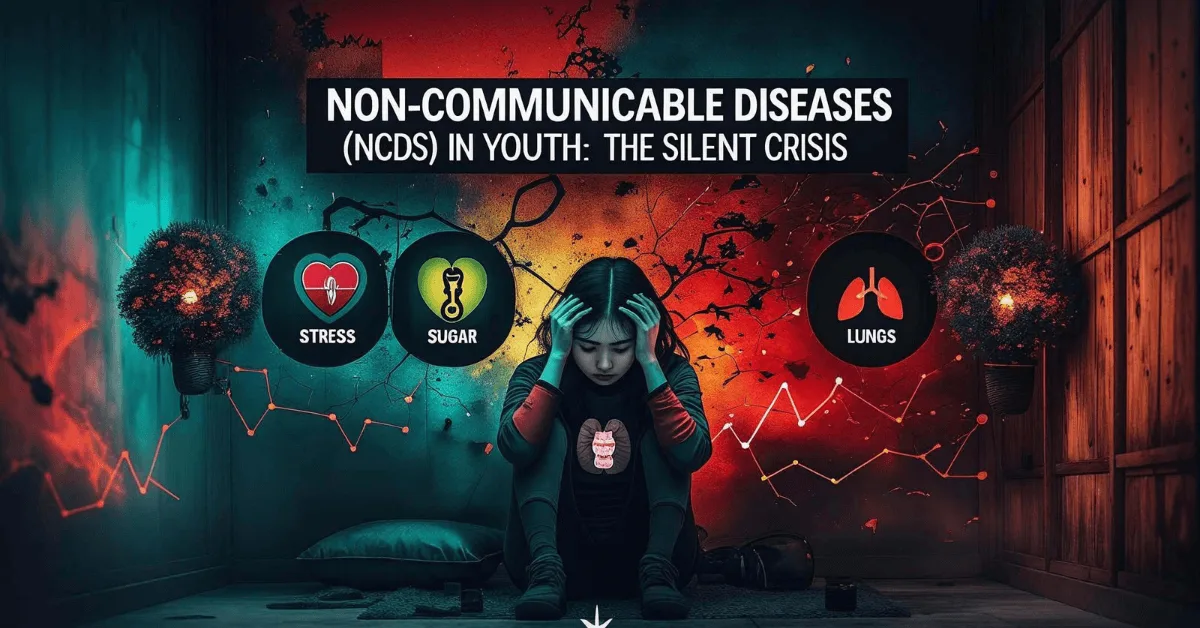
India’s young generation is facing a hidden yet devastating threat — non-communicable diseases (NCDs) such as diabetes, hypertension, obesity, and heart disease.
Once associated with older adults, these conditions are now increasingly affecting people under 30. According to the Indian Council of Medical Research (ICMR), NCDs account for over 65% of deaths in India — and the number is growing rapidly due to changing lifestyles, stress, and urban living patterns.
The Indian Council of Medical Research (ICMR, 2023) reports that NCDs cause 65% of all deaths in India, and cases among youth are increasing fast.
The World Health Organization (WHO) warns that India may lose $4.5 trillion in productivity by 2030 if the NCD crisis is not addressed.1
This isn’t just a health issue — it’s a generational crisis, and a wake-up call for youth-driven change.
Non-communicable diseases are chronic, non-infectious conditions that develop gradually and last long-term.
They are influenced by genetics, environment, and lifestyle choices.
Common NCDs include:
Cardiovascular diseases (heart attack, stroke)
Type 2 diabetes
Chronic respiratory diseases (asthma, COPD)
Cancers
Mental health conditions and stress-related disorders
These diseases often develop silently — showing few symptoms until serious complications occur. Hence the phrase “silent health crisis.”
India’s health landscape has shifted dramatically over the past two decades.
While infectious diseases once dominated, lifestyle-driven illnesses are now leading causes of death and disability.
According to The Lancet (2023) and National Family Health Survey (NFHS-5, 2022):
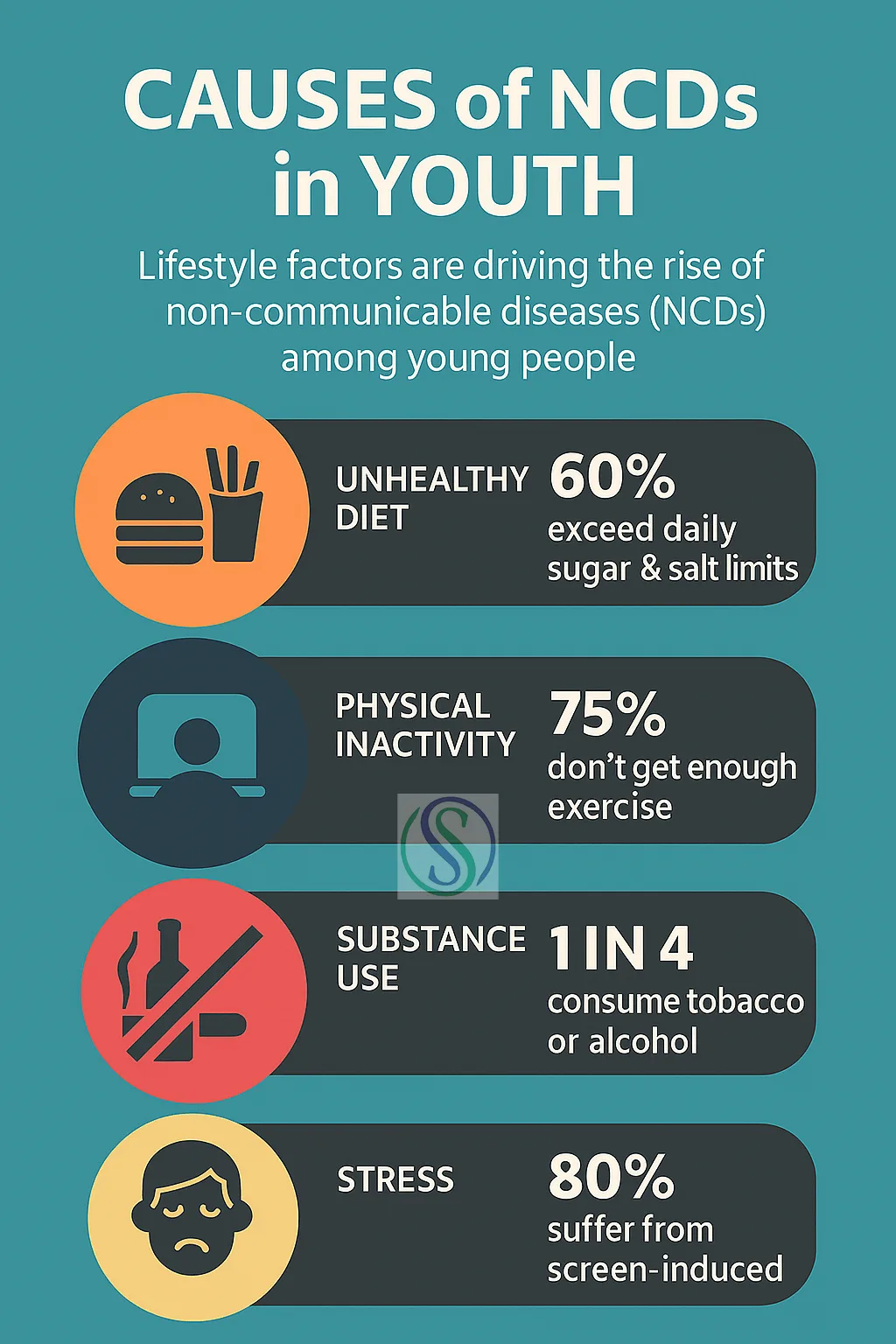
Online learning, remote work, and long screen hours have reduced daily movement.
The WHO India report (2023) revealed that nearly 75% of Indian teens fail to meet recommended physical activity levels.6
Academic competition and job pressure are major triggers of stress.
According to a UNICEF India youth survey (2023), 1 in 7 young Indians experiences mental health challenges that increase NCD risk.8
Air pollution, shrinking green spaces, and unplanned urban growth are major contributors to the rise of non-communicable diseases in youth. Constant exposure to poor air quality and traffic emissions increases the risk of asthma, heart disease, and other chronic respiratory problems.
While metro cities like Delhi and Mumbai remain at the center of India’s pollution crisis, Tier-2 cities such as Varanasi, Lucknow, Ghaziabad, Gurugram, and Patna are rapidly catching up.
According to the Central Pollution Control Board (CPCB, 2024), these cities frequently record PM2.5 levels above safe limits, exposing millions of young people to harmful air toxins daily.
Limited access to clean parks, cycling tracks, and open spaces further restricts physical activity — forcing youth into sedentary, indoor lifestyles that worsen NCD risks.
Cleaner cities mean healthier lungs — urban planning and green spaces must now be part of India’s public health strategy.
Early onset chronic illness: Reduces quality of life in productive years.
Financial strain: Costly lifelong medication for diabetes and hypertension.
Economic burden: The World Economic Forum projects $4.58 trillion in losses by 2030 due to NCD-related productivity decline.8
Schools and colleges should integrate health awareness programs on diet, physical activity, and stress management.
Introduce community fitness zones, college sports initiatives, and morning wellness programs.
Mental health is deeply linked to non-communicable diseases in youth, as chronic stress and anxiety can raise blood pressure, increase blood sugar, and disturb sleep cycles. According to UNICEF India (2023), 1 in 7 young Indians experiences mental health challenges, and many turn to unhealthy coping habits like overeating or substance use.7
Promoting mindfulness, yoga, and meditation can significantly lower stress levels and improve emotional balance. Regular practice reduces cortisol (stress hormone) and helps prevent hypertension and obesity — two leading NCDs. Schools and colleges should include mindfulness breaks and encourage open discussions around mental health to remove stigma.
NGOs like the Shail-Satya Foundation are helping bridge this gap by organizing community meditation sessions, youth resilience workshops, and mental health awareness drives. These simple, low-cost interventions empower youth to manage stress effectively and build a foundation for lifelong wellness.
Government initiatives like NP-NCD (National Programme for Prevention and Control of NCDs) need expansion into youth communities.
Introduce sugar tax and restrict junk food ads targeting minors.
Local NGOs can host health camps, nutrition drives, and fitness events — making preventive care accessible even in rural settings.
India’s youth form 34% of its population — the heart of the country’s future.
The power to reverse the NCD crisis lies in their hands.
“Every step, every choice, every mindful moment counts.”
Small lifestyle changes — eating well, exercising daily, sleeping enough — can prevent decades of suffering.
They are chronic diseases like diabetes, heart disease, and obesity caused by lifestyle and genetic factors.
Unhealthy diets, sedentary lifestyles, pollution, and mental stress are key drivers.
Yes. Early onset of obesity, diabetes, and hypertension is now common among adolescents.
Eat balanced meals, stay active, manage stress, and go for annual health checkups.
Through NP-NCD, India promotes early screening and prevention — but youth engagement remains essential.
The rise of non-communicable diseases in youth is one of the biggest silent health challenges facing India today. It affects not just individuals, but families, communities, and the country’s future workforce.
Behind every statistic lies a story — of skipped meals, sleepless nights, digital stress, and a generation silently struggling with health issues that were once considered diseases of old age.
But this crisis can still be reversed — through awareness, preventive education, and strong collective action.
When schools teach healthy living, when workplaces prioritize mental well-being, and when youth take small, consistent steps toward fitness and balance, the ripple effect can transform an entire generation.
“Health is not a privilege — it’s a daily decision.”
Empowering youth to make that decision, every single day, will define the health of India’s tomorrow.
A healthier generation isn’t just a dream — it’s a movement waiting to begin, one mindful choice at a time.
Every action counts — every shared story, every health camp, every mindful choice.
Your support can help us reach more youth with awareness programs, stress management workshops, and community health initiatives that prevent lifestyle diseases before they begin.
Together, we can build a generation that is informed, active, and emotionally resilient — one that chooses health over hurry, balance over burnout, and wellness over worry.
🌱 Be part of the movement for a healthier tomorrow.
🩺 Donate, volunteer, or collaborate with Shail-Satya Foundation today.

We are committed to transforming lives through education, healthcare, and empowerment. Our vision is a world where everyone has access to education and healthcare.
Join us and be part of the change!
We are Registered on NGO Darpan
Donate Now-Shail-Satya Foundation